Culture
The $40,000 Conversation Starter
"Nice watch. Which liquidity event was that?"

Women buy handbags. Hermès and Louis Vuitton. Dior and Chanel. Men get watches with equally luxurious names. Patek Philippe, Rolex, Audemars Piguet.
Just as women might use a purse to express personal style, men often use watches to signal what they value and, consciously or not, their own perceived worth.
Over the last year, I’ve noticed something happening at nearly every crypto conference I attend. Amongst the networking events, side dinners, and hallway conversations, I overhear one man complimenting another on the watch he’s wearing. During Consensus Miami, there was an entire poker tournament dedicated to winning a Rolex. That is when my radar went off: Watches mean something to men. I didn’t know what that something was, but I wanted to find out.
The exchanges at these events are usually brief, but what follows is often much longer: a conversation, a new relationship, sometimes even a business partnership.
It’s happened to Azeem Khan, co-founder at Miden. (We did a profile of him in our first issue. Check it out.) He met a big banker wearing a Patek Philippe Aquanaut during Proof of Talk in Paris, but when he saw him a few weeks later in the man’s Wall Street office, the banker was wearing a different watch.
“Naturally, I asked what happened to the Patek,” recalls Azeem. “That simple question ended up turning into the first 15 minutes of what was supposed to be a 45-minute meeting. We talked about the watches we own, the watches we want, what makes a collection feel complete, and the stories behind certain pieces. By the time we got around to discussing business, we had already established a level of rapport that would have otherwise taken much longer to build.”
I talked with several unapologetic watch enthusiasts in the space to better understand why these tiny mechanical objects continue to hold so much power in an industry built on digital assets.
I found out why, and I got a quick horology lesson in the process.
Before the 18th century, navigators would sail the globe using a simple method: looking to the sky. “You can tell where you are on the globe when you're navigating open water as long as you know [when] noon is within a certain margin of error,” says one multi-time crypto founder and CEO who prefers to remain anonymous. But looking at the sun and stars isn’t foolproof. You also need to know what time noon is at your destination, and determining longitude with old-school instruments was notoriously tricky.
In 1707, after more than a thousand Royal Navy sailors died in a shipwreck caused by navigational error, the British government offered a £20,000 prize to anyone who devised a method to accurately measure longitude at sea. Just over half a century later, the marine chronometer was invented. The world went from Columbus mistaking the Caribbean for the East Indies to a golden age of trade, for better and worse.
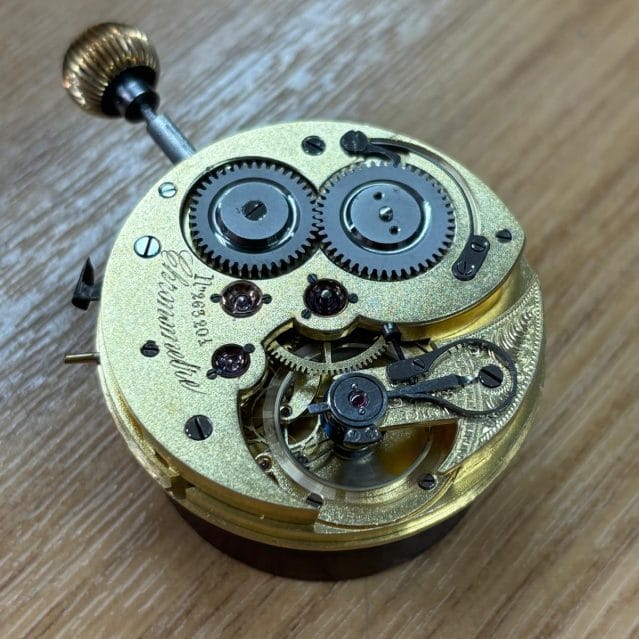
Fast forward to today, when any phone will keep the time for you, and the simple wristwatch has become the definition of a luxury item: something you desire but don’t need. That’s true whether it’s a $40 Casio or a $40,000 Breitling. We may not need them to tell time anymore, but watches can still signal something about us.
“If someone’s wearing something loud and oversized that’s clearly imitating a more recognizable model, it tells me something about their relationship with appearances versus substance,” says Anthony Vassallo, director of crypto at Silicon Valley Bank, who was drawn to Japanese watches partly because of their craftsmanship and picked each one to match a milestone in his life. “It’s not a judgment about money. It’s about taste and intentionality.”
In short, story trumps status.
“I think there's a lot of flex culture in crypto culture that is not really consistent with why I wear or buy watches,” says the anonymous CEO. When he bought a Rolex Submariner to reward himself for his first liquidity event, he says it wasn’t about flexing to others: “It’s not flashy, but it’s not not flashy because it’s a Rolex. It keeps time to within a couple of seconds per month as long as you keep it moving. It's a fascinating piece of technology.”
Muneeb Imtiaz, a product manager at a crypto company, quite literally bought his first watch because of a story.
The 38mm Hamilton Murph prominently features in his favorite film, Interstellar. “To me, that movie is about family, believing in yourself, chasing something bigger, and the difficulty of holding all of those at once. The watch is a small daily reminder of that.”
It’s not like a shared love of a Rolex on its own is enough to forge a partnership. But in an industry that is predominantly online, male-dominated, and not exactly known for extroversion, wearing a unique timepiece can be an icebreaker. Enthusiasts know this.
“If someone’s wearing something loud and oversized that’s clearly imitating a more recognizable model, it tells me something about their relationship with appearances versus substance,” says Anthony Vassallo.
Anthony says he regularly makes business connections because of watches. “It's one of the easiest natural conversation starters there is — especially with people who know what they're looking at. You can learn a lot about someone in that exchange.”
Of course, buying luxury items isn’t specific to crypto. As Azeem points out, whenever anyone suddenly gets money (and crypto has no shortage of liquidity events), they “naturally start looking for ways to spend it.” For some, it’s houses or cars; for others, it’s a watch.
And then there is the crypto of it all. As Muneeb says: “We collect magic internet money, some of us collected NFTs, and we like poking around to find what's out there. Watches scratch exactly the same itch.”
The best stories mix in a bit of contradiction to cut against cliche. Muneeb is keenly aware that part of the appeal might be that this once-essential item has been made inessential by modern technology.
“I find mechanical watches a little grounding given how digital and fast-moving everything else in my world is," he says. "There's something nice about an object that's purely analog, runs on a spring, and will quietly outlast whatever's on my screen today.”
Despite technical innovations, watches have stood the test of time. The relationships they forge may do the same.

Kili Wall
Kili is the Founder of The Index. She has spent eight years supporting companies across crypto, fintech, and emerging technologies tell their story. She is also the Founder & CEO of Wall Collective.