Opinion
AI Is Testing Cryptography’s Foundations. The Results Should Be Public.
As AI becomes a capable attacker, its failures are as informative as its successes.

In May, an OpenAI model disproved a conjecture Paul Erdős made in 1946 about how many pairs among a collection of points in the plane can be the same distance apart. Fields Medalist Timothy Gowers, who helped check the proof, wrote that had a human submitted it to the Annals of Mathematics, he would have recommended acceptance without hesitation. The company followed in August with ten papers by its Astra model on long-standing questions in mathematics and theoretical computer science. In October, OpenAI released 722 more manuscripts from an unreleased internal model, including claimed solutions to some of the most famous open problems in their fields.
Cryptography rests on mathematics, so it’s no surprise that AI is also advancing cryptanalysis, the study of how to break cryptographic schemes. In July, Anthropic reported an attack on HAWK, a recently proposed digital signature scheme that the U.S. National Institute of Standards and Technology (NIST) was evaluating for a new set of quantum-resistant standards. Its Claude Mythos model, prompted by a researcher who was not a specialist in the area, found the attack by extending a sequence of recent human discoveries. The attack did not make HAWK practical to break, but did weaken it enough that its designers withdrew the scheme.
Other recent results pair human insight with AI help. A new attack on the decades-old McEliece cryptosystem, first found by people and then optimized with AI, has not yet been carried out at real-world key sizes, but has led Germany’s federal cybersecurity agency to advise against new deployments. And a slew of other preprints, several heavily AI-assisted, report new cryptanalysis of one kind or another.
Successes like these make headlines. But Anthropic’s report also noted, almost in passing, that many of its model’s sessions found nothing new—and that may be just as significant. Our trust in a given cryptographic scheme comes from the failure of substantial, varied attempts to break it. As AI becomes one of the most capable cryptanalysts we have, the companies building it should share not only their tools but also what those tools have failed to accomplish.
This matters because cryptography is a public good. It secures our digital lives, from private messages and banking to software updates, and it works only when we can agree on which schemes are most trustworthy. That agreement has to rest on evidence everyone can see.
Cryptography is built on computational problems that we believe no computer can solve in any feasible amount of time. Because a large enough quantum computer could break much of today’s cryptography, the new “post-quantum” schemes now being deployed rely on problems that we believe resist quantum computers too. If such problems really are intractable, that is a law of mathematics—and no AI, however capable, can get around it.
The catch is that we do not know how to prove our cryptographic problems are intractable. Indeed, doing so would resolve the famous P versus NP question, one of the great open problems in mathematics. So we build confidence another way: we try very hard to find feasible algorithms for the problems underlying proposed schemes, or closely related ones, and we discard whatever falls. Every serious attempt that fails strengthens our confidence in whatever is left standing.
That confidence is only as strong as the effort behind it. In 2022, SIKE, a candidate in NIST’s post-quantum standardization process, was broken in about an hour on an ordinary computer. SIKE was built on maps between elliptic curves called isogenies, and the attack used a mathematical theorem from 1997 about those maps. Because SIKE relied on a problem that was fairly new when the scheme was proposed, and relatively few cryptographers were working on isogenies, no one had noticed that the 25-year-old theorem applied.
AI is starting to greatly multiply the effort and expertise devoted to cryptanalysis. That will expose more weaknesses, but it will also let us build confidence faster than ever before, because so much more cryptanalytic capability can be brought to bear so quickly.
Most of the weaknesses AI exposes will be matters of degree. Cryptographic schemes are rarely just “secure” or “broken”; they have security levels, which measure how much computation the best known attack needs. To keep cryptography by far the strongest link in any system, we build in a security margin: the gap between the level we need and what we believe we have. AI will very likely show that several schemes’ security levels, and thus their margins, are lower than we thought. That is no reason to panic, but it is a reason to use larger margins wherever we can. Fortunately, the new post-quantum standards are being deployed at levels well above what we need. A complete break of a widely deployed, long-scrutinized scheme is less likely but not unthinkable, which is why some settings call for “hybrid” schemes that remain secure as long as any one of their components does.
To build confidence faster, and to set security margins sensibly, the best tools need to be in the hands of the broader research community, which publishes what it finds so everyone can check the results and respond. Yet both Anthropic’s HAWK attack and OpenAI’s manuscripts came from models that academic researchers could not use. The labs should give academic cryptographers access to their most capable models, along with enough computing time to thoroughly explore the landscape of possible attacks. Public work can’t rule out a secret attack by, say, an intelligence agency, but the closer public researchers get to the best tools, the less room there is for anyone to stay ahead in private.
The labs could also do something just as valuable, using work they have already done: publish their negative results, in cryptography and in mathematics more broadly. Striking positive results are now a given. They show what models can sometimes do, but not where their abilities end. OpenAI says it gave its model roughly 4,000 open problems, but the manuscripts report only the successes. What the model tried on the rest, and where it got stuck, would tell us at least as much.
The labs’ reticence is especially costly for cryptography. Their models are plainly capable, yet the labs say very little about how those models fare against cryptographic schemes we actually rely on. This has fueled broad speculation about what attacks they have found or may soon find, with no real evidence to go on. That uncertainty does real damage: it muddies decisions about which schemes to trust, and could prompt needless moves away from ones that aren’t actually vulnerable.
If a lab has pointed its best model at a new post-quantum standard for weeks and barely improved on known attacks, the world should know that, along with what it tried. Such a report would add to our confidence in that standard. In Anthropic’s case, the community most needs to know what else its model was pointed at, and where it came up empty.
Further out, AI may even help with the fundamental mathematical question: proving that our cryptographic problems really are hard, or at least providing more convincing evidence than our failure to break them. Cryptographers have always invited people to attack their proposals, and the most capable new attackers are being built inside a few companies. We need to see what they have tried, and especially what has failed.
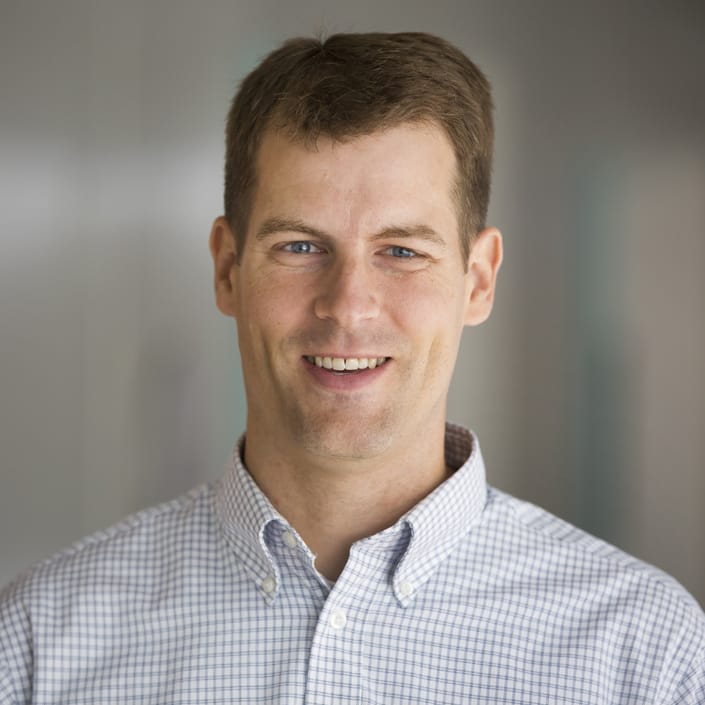
Chris Peikert
Chris Peikert is Chief Scientific Officer at Algorand and the Arthur W. Burks Collegiate Professor of Computer Science and Engineering at the University of Michigan.