Profile
Azeem Khan: Crypto’s Renaissance Man Can’t Stop the Hustle
Azeem Khan had a goal when he was younger: to get rich. Not just vacation-home rich or fancy-car rich.
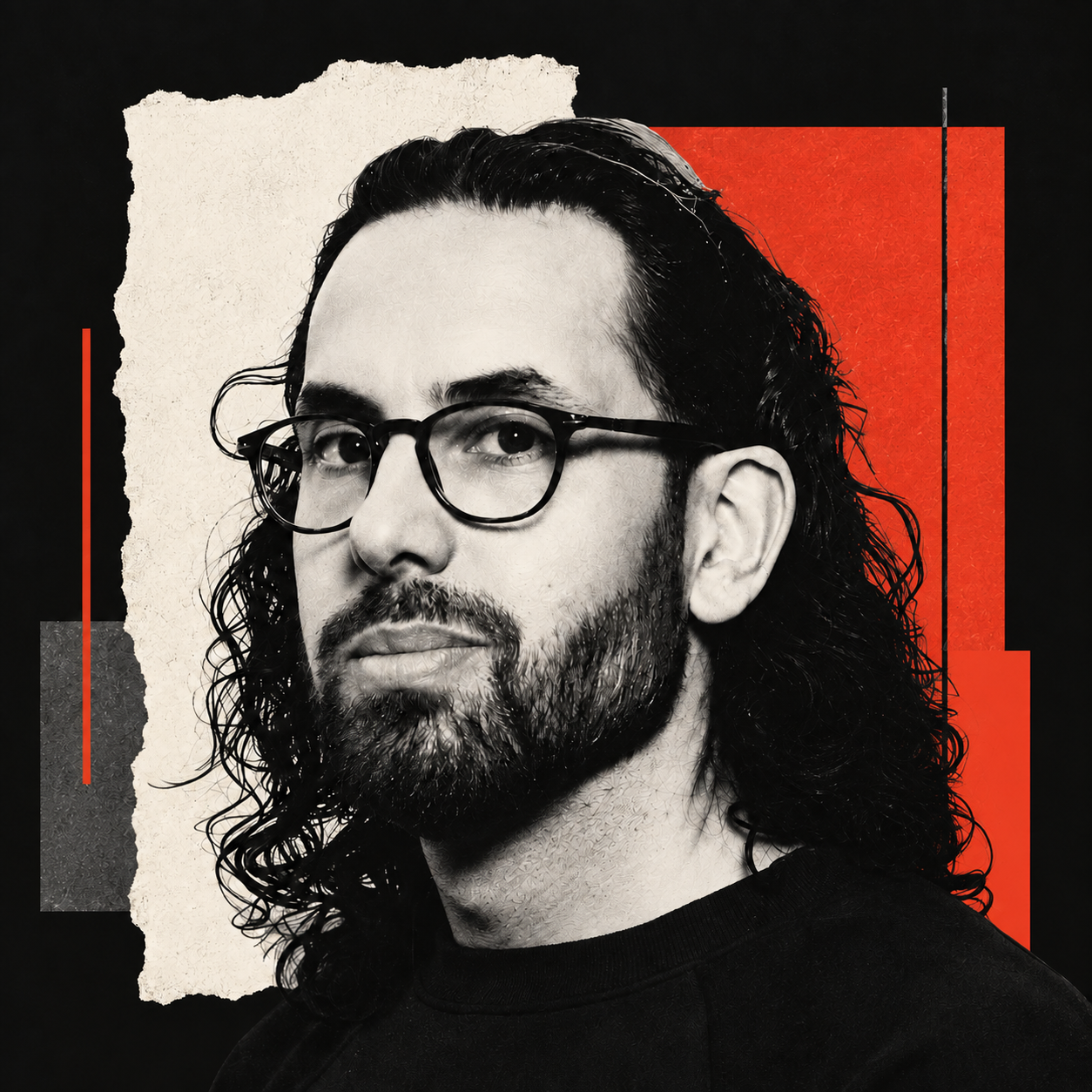
Azeem Khan had a goal when he was younger: to get rich. Not just vacation-home rich or fancy-car rich. He wanted to be filthy, inconceivably, awe-inspiringly rich.
“I remember standing up in sixth grade and saying, ‘One day it's going to be Rockefeller, Carnegie, and Khan,’” he tells me via Zoom call. When he was in early primary school, teachers asked him what he wanted to be when he grew up. He’d tell them: “rich.”
“They'd say, ‘No, you don't understand the question.’ I'd say, ‘No, you don't understand the answer.’"
It’s 2026, and Khan, a co-founder of Miden, a blockchain privacy startup that’s raised $25M in seed funding from the likes of a16z and 1kx, is not Rockefeller rich (although a vacation home isn’t a stretch). He’s actually in debt, still paying off a life he never lived.
When I first sit down with Khan, he is squeezing me in during a busy month that saw him interview former NBA All-Star Allan Houston about celebrity and attend a premiere of one of his favorite hip-hop groups at the Tribeca Film Festival. As soon as he hangs up, he needs to prep for a call with investors and put together a presentation for the SEC’s crypto task force. But first, he is trying to get his digital camera settings back so he can start doing video content. Khan, you see, is not any one thing. He is all the things: a builder and an entrepreneur; a hype man and a hustler; an entertainer and an intellectual.
That path toward eclecticism hasn’t brought him riches, but it has brought him a happiness his teenage self would be proud of.
“I've met basically every celebrity I would have dreamed of. I had dinner with Spike Lee. I've met Denzel Washington, Jay Z, Beyoncé, Colin Kaepernick. I've played FIFA with Luka Dončić. I've met Drake. Kanye West owes me money. It's been a genuinely cool life.”
It almost didn’t happen.
A car accident during his sophomore year of college left him with what appeared to be brain hemorrhaging. He made a deal with himself (and maybe God and/or the universe) in the waiting room that if he was okay, he’d give up his dreams of wealth. It turned out to be a minor concussion. Khan went home and told his parents he was going to become a doctor.
For most sons of Pakistani immigrants, going into medicine would be very on brand. For Khan, it didn’t feel right. The universe, it seemed, didn’t sign off on the deal he had made with himself. He charged ahead anyway, finishing a master’s thesis at Boston University and getting ready to matriculate at Harvard Medical School. “Everyone around me — friends, everyone — kept saying, ‘You're not supposed to be a doctor. You were the kid selling Pokémon cards and candy in third grade.’ But I felt like I'd gone too far to quit.”
That changed when the universe started talking to him again, this time not via a drunk driver leaving him with a concussion. It was much worse.
It was 2013, and Khan was running the Boston Marathon. He wasn’t in it to win it — like so many things in Khan’s life, it was just a thing he was interested in doing. A friend decided to join him about midway through his training. Khan ran about 90 seconds slower per mile than his training pace so he could run beside him. “Around mile 21, my phone started buzzing nonstop. A friend called crying: ‘Please don't go to the finish line.’ I said, ‘What is going on?’”
Khan thought it was a gas explosion. Everyone would soon learn that two bombs had detonated near the finish line, killing three people and leaving 12 more amputees. Police stopped the race. Khan went home, down the road to Cambridge, and reassessed which of life’s races he wanted to run.
“I just sat there and thought, ‘I can't do this anymore.’ I wouldn't say it was divine intervention exactly, but it was: ‘I can't ignore this sign, from the universe, from God, from whatever it is.’ And I think what you've seen throughout the rest of my career — the 180-degree turns that don't make sense on paper — has been guided by that same principle. When something feels wrong, I change it, whatever the cost.”
An incomplete list of the 180-degree turns he has made:
- Co-founded Blasé, an app-design firm where he helped Teyana Taylor (the future Oscar-nominated star of One Battle After Another) launch a workout program
- Launched Kim Coindashian, an altcoin project that earned him a crypto rite of passage: a cease-and-desist letter
- Started Unanimous Games, an eSports outfit that sought to give gamers the kind of spotlight other entertainers receive
- Joined mobile game startup Aglet (“STEPN without crypto,” he calls it) as head of partnerships
- Contributed dozens of entertainment articles to The Huffington Post
- Dabbled in venture funding as a fellow with LDV Capital
And then came crypto, for real this time, and without the cease and desist. It started off as no more or less special than any of his other forays. Roles at Gitcoin — first as a part-time fellow before ultimately becoming Head of Impact — left him with a deep knowledge of the crypto landscape despite having no technical background. “I knew every L1, every L2… I helped launch one of the first OP Stack superchains, called Public Goods Network. I'd been writing for CoinDesk and Forbes, calling institutional adoption before most people were saying it.”
But when he took a role with stablecoin-focused layer-2 Morph, for which he retroactively got a co-founder designation, he felt stymied — like “I didn't get the chance to show that I really knew what I was doing when it came to launching a new network.”
When he exited Morph in the spring of 2025, digital assets were heating up. The second Trump administration had made cryptocurrency central to its economic policies, and markets were embarking on an extended run that would take bitcoin past the $125K mark for the first time.
“There was an offer from a big protocol: half a million a year base, a million in tokens annually,” he recalls. “The most money I'd ever been offered by far. I would have been able to pay off everything. But the moment the recruiter mentioned it, the first thing I thought was: ‘What kind of Porsche do I want to buy?’ And I thought, ‘This job isn't for me. If the first thought is the car, I can't do it.’”
Instead, he went with Miden, a project whose mission involves a very “boring unlock”: helping institutions maintain privacy, something Khan considers essential for blockchain to go mainstream.
He admits that the boy who just wanted to be rich hasn’t quite figured out how to navigate the tension between the flashy and the matter-of-fact — running a protocol and still keeping a toe in the entertainment world. “Most people doing this work are doing one thing or the other,” he says. “But because I've lived both lives, I can do both simultaneously.”
As our conversation winds down, his mind turns back to the camera he’s been fiddling with and trying to get the video settings right. He references the 2014 Kim Coindashian experiment that dragged entertainers into the digital currency age.
“I think once I unlock that bridge between entertainment and deep tech, everything changes. I just don't know exactly what it looks like yet. And when I try to explain it, people think I sound crazy.” He stops himself, then adds, “Which, honestly, has been pretty consistent throughout my career.”
Jeff Benson
Jeff is the Editor-in-Chief at The Index. Formerly, he was a senior editor at Decrypt and a16z's Future. When he's not writing about emerging tech, he covers movies, sports, business, and (occasionally) where to get good marmalade in Nevada.